


Art therapy for what needs more than talk.
Art therapy gives experience a form we can look at together.
What is art therapy?
Art therapy is a clinical form of therapy that uses art-making, images, materials, metaphor, and reflection as part of the therapeutic process. You do not need to be an artist, and the goal is not to make something beautiful or finished. The artwork gives us something outside of talk to notice, organize, question, and return to together.
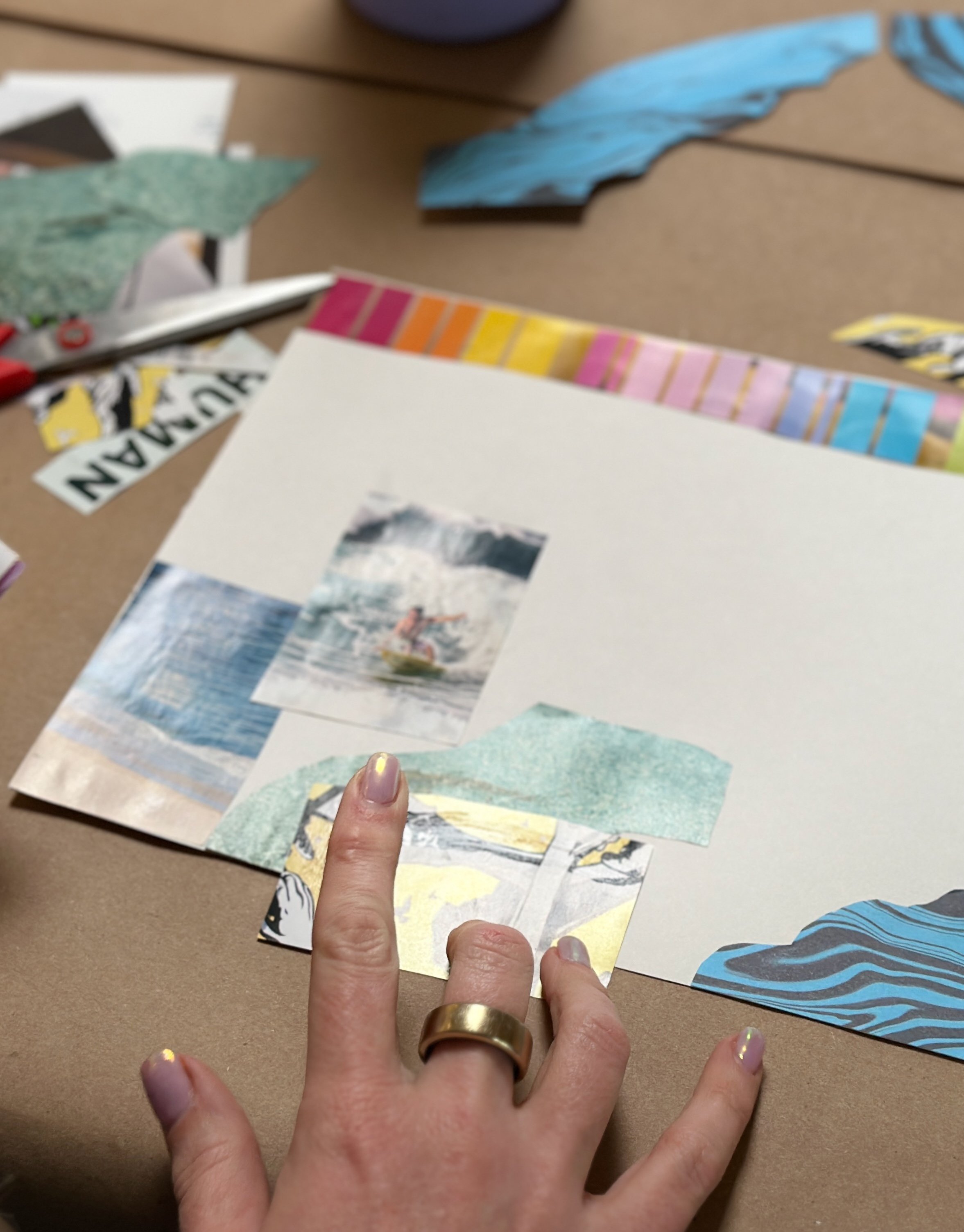
Sometimes talking alone becomes too abstract, too fast, or too familiar. Art-making can slow things down. A color, shape, object, image, gesture, list, or mark can help make something visible enough to work with — without needing to explain it perfectly right away.
You do not have to know what you are making before you begin.
How art therapy works with me
We use structure, choice, and curiosity to find a workable way in.
In session, we may talk, draw, write, move, use a whiteboard, work with color, listen to music, notice body sensations, or simply stay with what is present. I may offer a prompt or structure, but you will not be forced into art-making or pushed toward a meaning before you are ready.
The materials matter. A pencil, oil pastel, collage, paint, thread, photograph, found object, digital image, or simple list can each offer a different kind of contact. Sometimes art helps regulate the nervous system. Sometimes it helps externalize a relationship pattern, a feeling, a memory, a question, or a conflict that has been hard to hold internally.
When clinically appropriate, art therapy can also support EMDR, somatic awareness, grounding, or preparation for deeper trauma work. We may use images or materials to build resources, clarify what feels manageable, or notice what your body is communicating before moving further. The work is not about performing insight. It is about finding a form, pace, and level of contact that your system can actually use.
For some people, art-making becomes central to therapy. For others, it appears occasionally, alongside conversation. What remains consistent is attention to your agency, your pace, and what helps the work stay connected rather than overwhelming.
Art therapy may support work with…
Experiences that feel tangled, divided, or hard to organize
Memories, sensations, or questions that are difficult to explain in words
Anxiety, grief, anger, shame, uncertainty, or emotional overwhelm
Relationship patterns, family-of-origin material, and old protective strategies
Creative blocks, burnout, identity questions, and major life transitions
Frequently asked questions about Art therapy
FAQs
-
Art therapy can help when talking alone is not enough, or when you understand something intellectually but still feel stuck emotionally, relationally, or physically. Making something gives us a shared point of reference. We can look at it together, notice what changes, return to it over time, or use it to approach something indirectly.
-
Materials may be simple: paper, pencil, markers, oil pastels, collage, paint, clay, photographs, digital images, music, writing, or objects from your space. I may suggest a material or structure, but we will pay attention to what feels manageable, useful, or too much. The focus is not technical skill. It is what the material helps you notice.
-
Online art therapy can work well with simple materials you already have at home. We may use your camera to look at artwork together, use a digital whiteboard, review images you choose to share, or work with writing, movement, objects, or sensory noticing. We will also talk about privacy, storage, and what feels comfortable to share on screen.
-
Art therapy is not an art class, and it is not the same as making art on your own for relaxation. In art therapy, the creative process happens within a clinical relationship. We pay attention to what the image, material, process, body, and therapeutic relationship reveal together. The goal is not artistic improvement. The goal is to support therapeutic work.
-
Yes. Artwork made in therapy belongs to you. In online sessions, you keep the physical work in your own space. With your permission, I may keep images of artwork in your confidential clinical file so we can return to them and notice themes or changes over time. We will discuss privacy, storage, and your preferences together.